
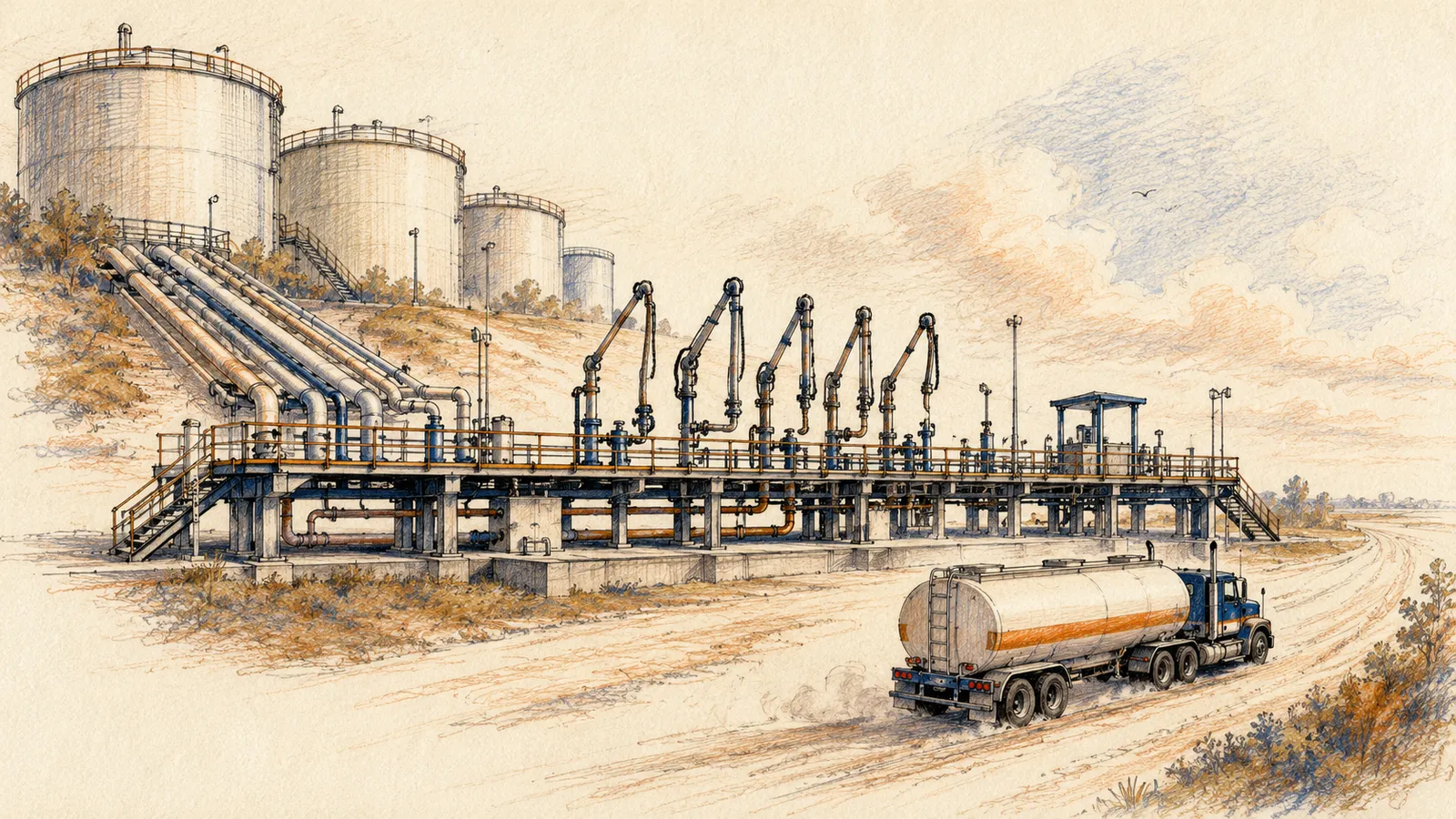
The rack is the spot at a fuel terminal where trucks load fuel. Above the rack means fuel that is still inside the terminal and pipeline system before it gets loaded. Below the rack means fuel that has been loaded and has left the terminal. The line matters because it often decides who owes fuel tax and how the price is set.
What the rack is
A fuel terminal is a large storage site fed by pipelines or barges. The rack is the loading area where tanker trucks pull in and fill up. The price to load fuel at that point is called the rack price. When a fuel jobber buys at the terminal, they buy at the rack.
What above the rack means
Above the rack is fuel still in the bulk system. It is sitting in the pipeline, in storage tanks, or moving between terminals. At this stage the fuel is traded in large amounts between refiners, traders, and suppliers. Most of these moves happen before any per-gallon fuel tax is charged.
What below the rack means
Below the rack is fuel that has been loaded onto a truck and removed from the terminal. Once it crosses the rack, it is headed to a station, a business, or a storage tank. For many fuel taxes, this is the point where the tax kicks in. The moment fuel is removed at the rack is a key event for tax records.
Why the line matters for taxes
Federal and many state fuel taxes are tied to the moment fuel leaves the terminal at the rack. This is called removal at the terminal rack. The party that removes the fuel, often called the position holder, is generally on the hook for the tax at that point. Fuel sold above the rack, inside the bulk system between registered parties, usually moves tax-free. Once it drops below the rack, the tax clock starts. This is why your bill of lading and your tax records center on rack activity. For the full breakdown, read motor fuel excise tax explained.
This is general background, not tax advice. Check the rules for your states with your accountant.
Why the line matters for pricing
The rack price is the base price for a jobber. Suppliers post rack prices that can change daily, sometimes more than once a day. OPIS, the Oil Price Information Service, collects those postings and publishes the rack benchmarks most supply contracts price against. A jobber buys at the posted rack price, then adds a markup and a freight charge to set the customer price. Because the rack price moves, a jobber watches it closely to protect the margin on every load.
What this means for a jobber
For a jobber, the rack is the center of the day. You buy at the rack, the tax attaches near the rack, and your margin starts at the rack. Keeping clean records of every rack purchase, with the gallons, the price, and the taxes, is the base of a healthy back office.
Answers to common questions
Is the rack price the same as the spot price?
No. Spot prices cover bulk fuel traded above the rack in pipeline or barge lots, tens of thousands of barrels at a time. Rack prices cover truckload volumes at the terminal and include terminal costs, so they sit above spot and the two can move at different speeds.
Who is the position holder at a terminal?
The position holder is the party the terminal operator's records show as holding the fuel inventory. Under federal excise rules, the position holder generally owes the tax when fuel crosses the rack, which is why most jobbers buy from registered suppliers instead of holding terminal positions themselves.
Does every gallon get taxed when it crosses the rack?
No. Dyed diesel for off-road and farm use leaves the rack without the federal highway tax, and exports and some government sales are exempt. Each exception needs its own paperwork, which is why exemption certificates ride along with the load documents.
What is a terminal control number (TCN)?
Every IRS-approved terminal has a terminal control number, and that TCN prints on the bill of lading for each load. Fuel tax reports and audits use it to tie a load back to the exact terminal it left, so a missing or wrong TCN is a common audit flag.
Background drawn from the IRS guidance on motor fuel and removal at the terminal rack, and the Federation of Tax Administrators motor fuel uniformity project. As of June 2026.