
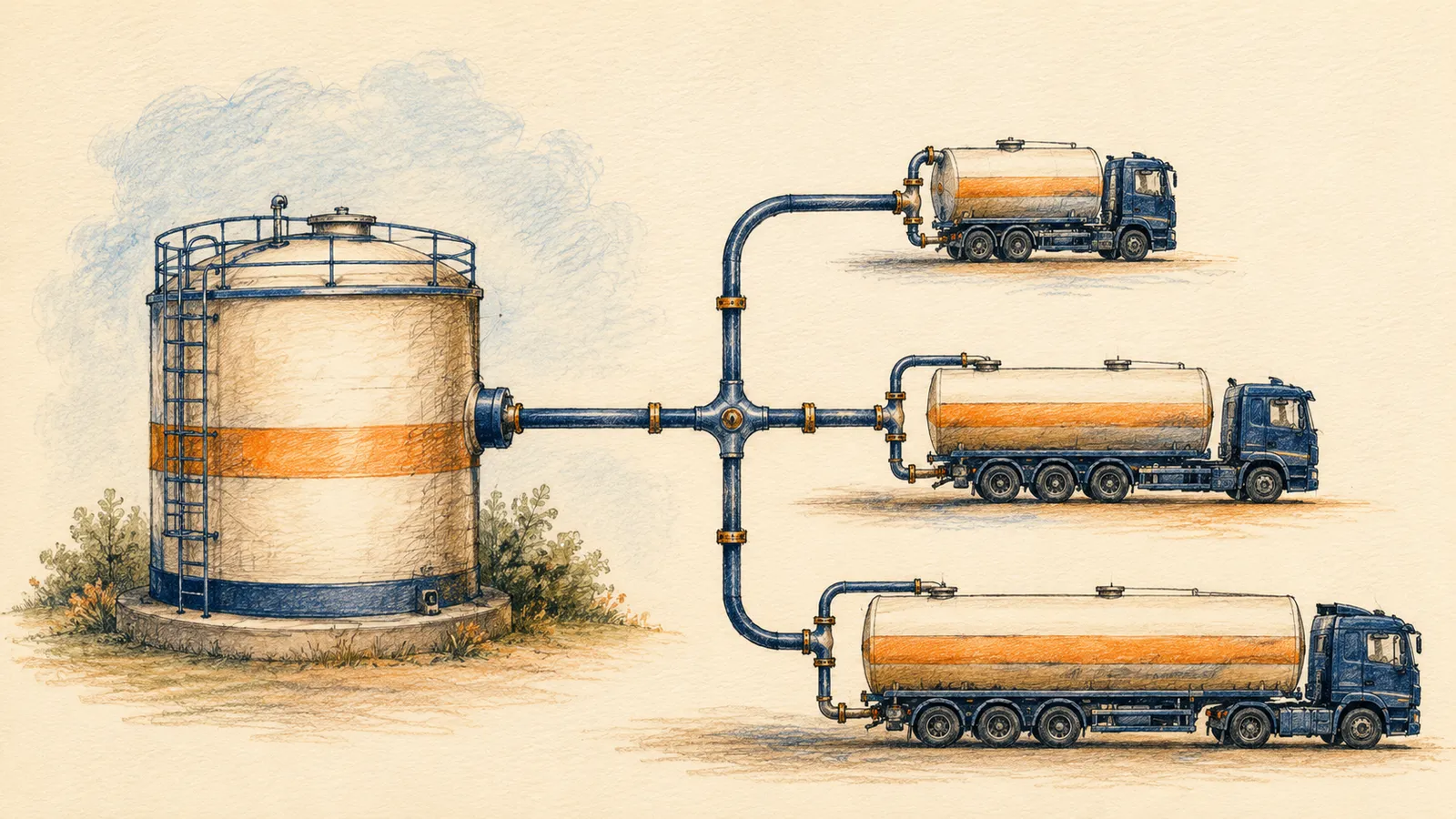
Sooner or later the call comes: your supplier is putting you on allocation. Supply is tight, your orders are capped, and now you have to ration short fuel among customers who all need it. How you handle that stretch is remembered long after supply loosens. What follows is a practical playbook for getting through it well.
What allocation means
Being on allocation means your supplier has capped how much you can buy. The cap is usually set terminal by terminal, as a percentage of your ratable lifting history. Say you averaged 50,000 gallons a week at a rack over the past 90 days and the supplier sets allocation at 80 percent: you now have 40,000 gallons a week to work with there. It can happen fast. When the Colonial Pipeline shut down for about five days in May 2021, terminals across the Southeast went on allocation within days. That one line carries roughly 45 percent of the East Coast's fuel. For the mechanics of why it happens, see what is fuel allocation.
Ration by a clear rule
Favoritism you cannot explain will cost you accounts. Pick one rule, write it down, and apply it to every customer. A workable triage order:
- Contract gallons first. Those are commitments, and breaching them has legal weight.
- Accounts where a dry tank stops something critical: hospitals, emergency fleets, municipal services.
- Your highest-volume regular accounts, prorated to the same percentage your supplier gave you.
- Spot and occasional buyers last, and on hold if the cap is tight.
If your allocation is 80 percent of normal, telling regular customers to expect about 80 percent of their usual load is a rule everyone can check. Customers forgive a shortage they understand far more than one that feels arbitrary.
Decide with data, not emotion
To make fair calls under pressure, you need each customer's volume, value, and commitments in front of you. That turns "who do I cut" from an anxious guess into a defensible decision. FastDragon Fuel Jobber keeps those numbers next to your current supply position, so the calls take minutes. The aim is to come out the other side with your key relationships intact.
Reduce the odds next time
You cannot prevent every shortage, but you can soften it. Cover a base load with contract supply so you are not fully exposed to the spot market, diversify supply points where you can, and watch for the signs a tight market is building. A sensible supply strategy is your best protection.
Common questions
How long do fuel allocations usually last?
It depends on the cause. A pipeline or refinery outage measured in days can keep terminals tight for weeks afterward while inventories rebuild. Market-wide tightness, like a regional diesel squeeze, can hold allocations in place for months. Watch your supplier's terminal notices, since caps are usually adjusted week by week.
What is ratability, and why does it matter in a shortage?
Ratability means lifting steadily against your contracted volume month after month instead of in bursts. Suppliers run the allocation math off that record, so a jobber who lifted erratically starts from a smaller base. Staying ratable in normal times is what earns you gallons in tight times.
Do suppliers have to sell me fuel during a shortage?
Only to the extent your contract says so. Most supply agreements include an allocation or force majeure clause that lets the supplier prorate deliveries when supply is constrained, and spot buyers have no claim at all. Read the allocation clause before a shortage, because that is when you find out what it covers.
Can I buy from another supplier while on allocation?
For unbranded gallons, usually yes, if you can find them: spot prices spike in a shortage and nearby racks are often capped too. Branded contracts typically require branded product at branded sites, so check your agreement before substituting, and document anything you do under an emergency waiver.