
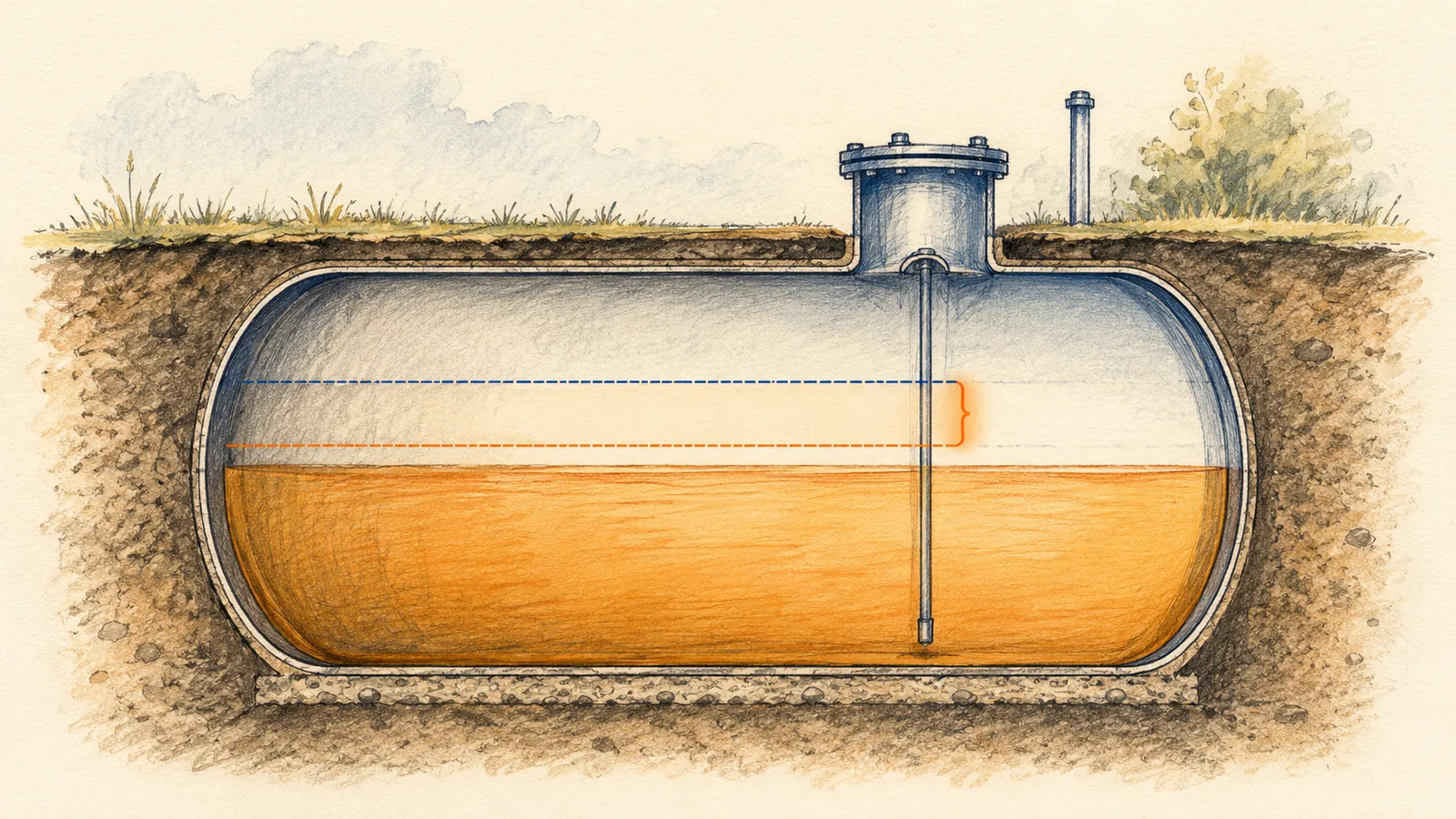
Wet stock is the fuel in your tanks. Wet stock reconciliation is the daily check that compares the fuel you should have against what is actually there. Get it right and you catch a leak or a steady loss early. Skip it and a small problem can run for weeks. The math is simple to follow.
The basic math
For each tank, you track book stock against measured stock:
- Opening volume from the last reading.
- Plus deliveries dropped into the tank.
- Minus sales pumped through the dispensers.
- Equals book stock, what you should have.
Then you compare that book figure to the metered reading from the tank gauge. The difference is the variance. A clean station runs close to zero. A growing gap is the thing you want to catch.
What variance is telling you
Not every variance is a crisis. The skill is reading which is which:
- Normal noise. Temperature swings expand and shrink fuel, meters drift, and measurement is never perfect.
- Money problems. Theft, drive-offs, and a miscalibrated dispenser bleed margin.
- Serious problems. A steady, one-directional loss can mean a tank or line leak, which is a safety, environmental, and cost issue all at once.
One odd day is noise. The same small loss every day is a signal. That is why the trend matters more than any single reading.
Why daily beats monthly
Reconcile daily and a developing leak shows up as a pattern within days. Reconcile monthly and the same leak can run for weeks before the numbers flag it, turning a small fix into a big cleanup. Federal UST rules accept monthly inventory control or SIR as release detection, so daily is a best practice rather than a mandate. It is the cheap kind of insurance.
How software makes it manageable
Doing this by hand across multiple tanks and stations gets unwieldy fast. FastDragon ties your delivered gallons, dispenser sales, and tank readings together and flags the variance automatically, so a problem surfaces while you can still act on it. It is part of the a full c-store back office back office, alongside pricebook and shrink.
Answers to common questions
What is wet stock reconciliation?
Wet stock reconciliation is the routine of proving the fuel in your tanks matches what your records say should be there. Sales and deliveries give you a paper figure for each tank; the gauge gives you a physical one. Any persistent gap between the two is your earliest warning of a leak, theft, or a drifting meter.
What causes wet stock variance?
Normal causes include temperature changes that expand or shrink fuel, meter calibration drift, and small measurement error. Problem causes include theft, drive-offs, dispenser miscalibration, and, most seriously, a tank or line leak. The job of reconciliation is to tell normal noise from genuine trouble.
Is daily fuel reconciliation required by law?
In the US, no. The federal release-detection rules can be satisfied with monthly inventory checks or statistical inventory reconciliation (SIR), and your state may set its own bar. Daily is the operator standard because it shrinks the window: a slow leak found on day three costs far less than one found at month end.
What is an acceptable fuel variance?
A common rule of thumb is a variance within about 0.5 percent of throughput over a period, but the threshold depends on your equipment and local rules. What matters more than a single day is the trend. A small loss that repeats day after day is a signal, even if each day looks minor.
Why is wet stock reconciliation important?
It protects your margin and it protects the environment. Catching a leak early avoids a costly cleanup and regulatory trouble, and catching steady shrinkage protects the thin margin on every gallon. It is both a compliance task and a money task.