
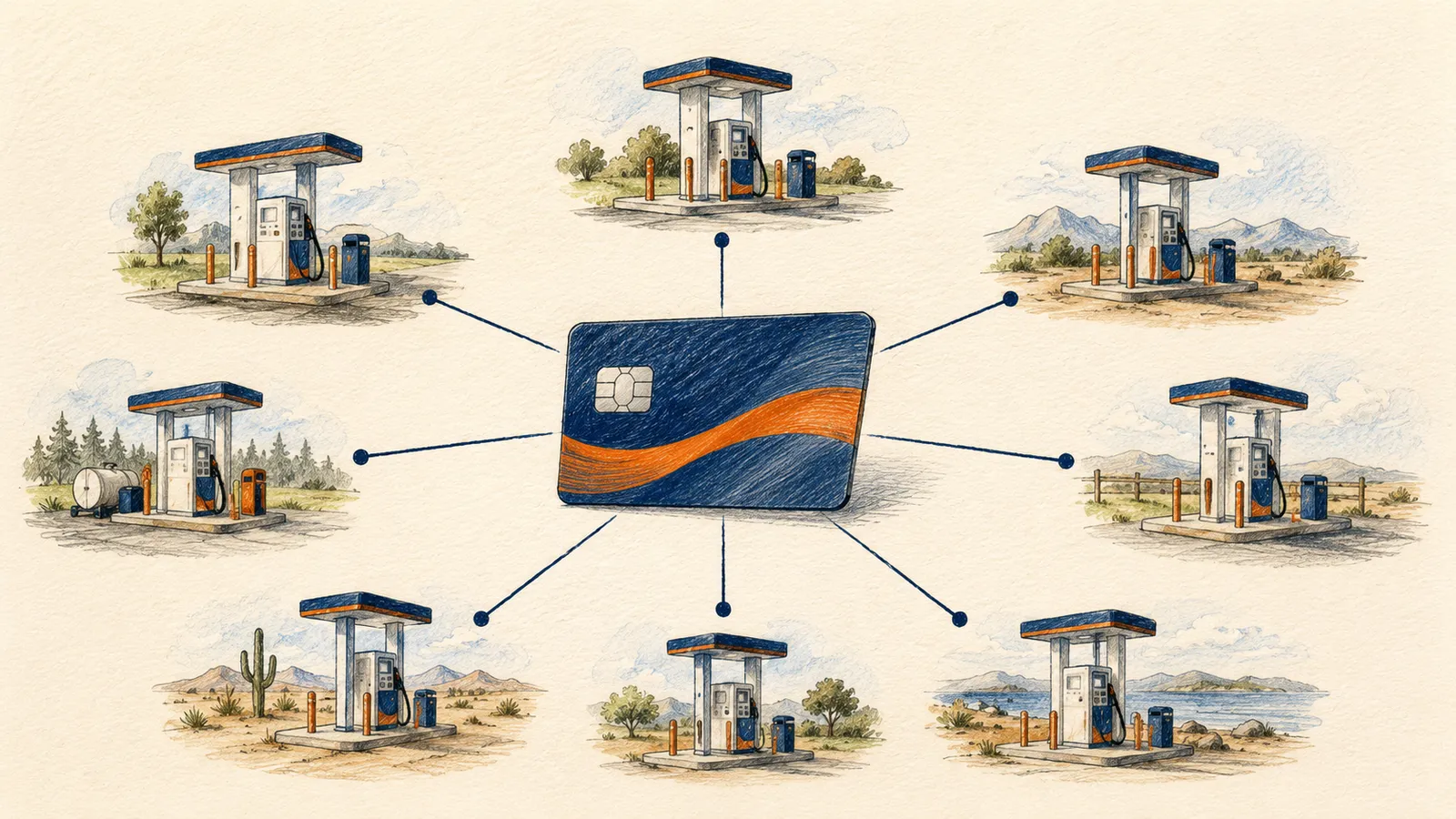
Cardlock sites and retail stations price fuel in different ways and produce different paperwork. That difference matters more than the locations do. This compares the two on price mechanics, control, and coverage, and shows how the usual blend works.
The two options
Cardlock fueling uses unattended, commercial-only sites accessed with a fleet card, open 24/7 and built for trucks. Retail means using regular public gas stations. Cardlock is geared to fleets with controls and reporting; retail is everywhere but offers less fleet-specific control.
How the gallon gets priced
This is the structural difference. Most cardlock programs bill cost-plus: the OPIS wholesale rack price for your market that day, plus taxes, plus a fixed markup in your agreement. Retail is street price, set sign by sign to cover the station's land, labor, and margin. Fuel card vendors commonly cite cardlock cost-plus prices running 10 to 35 cents per gallon under nearby retail, varying by market. Confirm current spreads in your region before you bank on a number.
The spread is structural, so it persists, with one wrinkle. Rack prices move daily while street prices lag. In a fast-rising market a retail sign can briefly sit below your cost-plus price. Over a quarter the cost-plus side usually wins for steady commercial volume.
Why fleets like cardlock
- Commercial-only sites, faster for trucks.
- 24/7 access.
- Purchase controls by card, set through fuel card controls.
- Itemized per-vehicle reporting on one invoice.
A cardlock network makes the footprint usable. CFN runs about 3,000 cardlock sites and extends past 50,000 locations through its Fuelman retail partners. Pacific Pride lists over 1,250 franchise sites with similar extended access. One card and one invoice cover all of them.
When retail fits
When coverage is the priority. Drivers who range widely need to fuel wherever they are, and not every route passes a cardlock site. So most fleets blend the two: cardlock where it exists, retail to fill the gaps. The blend creates the paperwork problem, two transaction streams in two formats. FastDragon Fleet captures both, applies the same controls to each, and ties every gallon to a vehicle and driver, so the mixed setup still reports as one ledger.
What people ask
Can anyone fuel at a cardlock station?
No. Cardlock sites are unattended and the pumps only activate for cards issued on a commercial account with that network or one of its partners. There is no cashier and usually no posted price sign, because each account pays the price set in its own agreement.
Why does the cardlock pump ask for an odometer reading?
Many cardlock keypads prompt for an odometer or vehicle ID before the pump unlocks. That entry ties the gallons to a specific truck, which lets fleet software compute miles per gallon and flag fills that do not match the mileage. A retail pump captures none of that.
Do cardlock sites sell dyed diesel and DEF?
Many do. Dyed off-road diesel and DEF at the pump are common cardlock products that most retail stations skip, which matters for construction and agricultural fleets. Products vary by location, so check the network site directory before routing trucks there.
How does cardlock fueling affect IFTA reporting?
Cardlock invoices itemize every transaction with date, site, state, product, and gallons, which is what IFTA quarterly filings require. Fleets that fuel at retail have to collect and key in driver receipts instead, so a consolidated cardlock invoice cuts that work and closes audit gaps.